The timing on this list could be better; with The Conjuring: Last Rites opening this weekend, you may find a little trouble squeezing everything in. The solution is simple: either swap out one film for another—in which case I recommend swapping out Rosemary’s Baby as The Conjuring opens on Friday—or bookmark this list and return to it early next week. Anywho …

Calamity on Cinema this week brings us the unsettling Watcher, along with a few named influences for the film by the director herself, Chloe Okuno. Watcher is slow and deliberate, paced to give space to allow your imagination free reign. The anticipation is tenuous; it carries us through the long, drawn out segments of the film. This style is drawn from films like Polanski’s Rosemary’s Baby, where the space and setting give rise to our own descent into anger and frustration, echoing those of the main character.

Take up the list and begin with Rosemary’s Baby. This is classic horror; coupled with its vintage appeal, this may be enough to argue for this film as a strong starter. But more to the point of the influence, we are provided with a foundation of a feeling of powerlessness upon which the other films will build on. Next, enjoy It Follows, an earlier film of Okuno’s, which takes the feeling of powerlessness to a new level, putting a paranormal spin on the stalker motif, which adds an extra element of creepy. Complete this journey with Watcher. Watcher plays with the balance between powerful and powerless, and firmly grounds the stalker horror in reality. The more polished look and feel of the film will also bring a welcome closure to this unofficial trilogy.

You can watch Rosemary’s Baby for free here on the Internet Archive.

The entire Calamitous review for Watcher is included below. Be forewarned, there are spoilers. I will, however, argue here that knowing of these things will not spoil your enjoyment of the film in whole. But as I highly recommend watching Watcher, feel free to return to this review upon your completion of it, just in case.

According to JEST, the Calamity's official content rating system, we give Watcher a resounding:

🤡

For more information on JEST, visit this page. Find the full Watcher review below, and the official list on Letterboxd here:
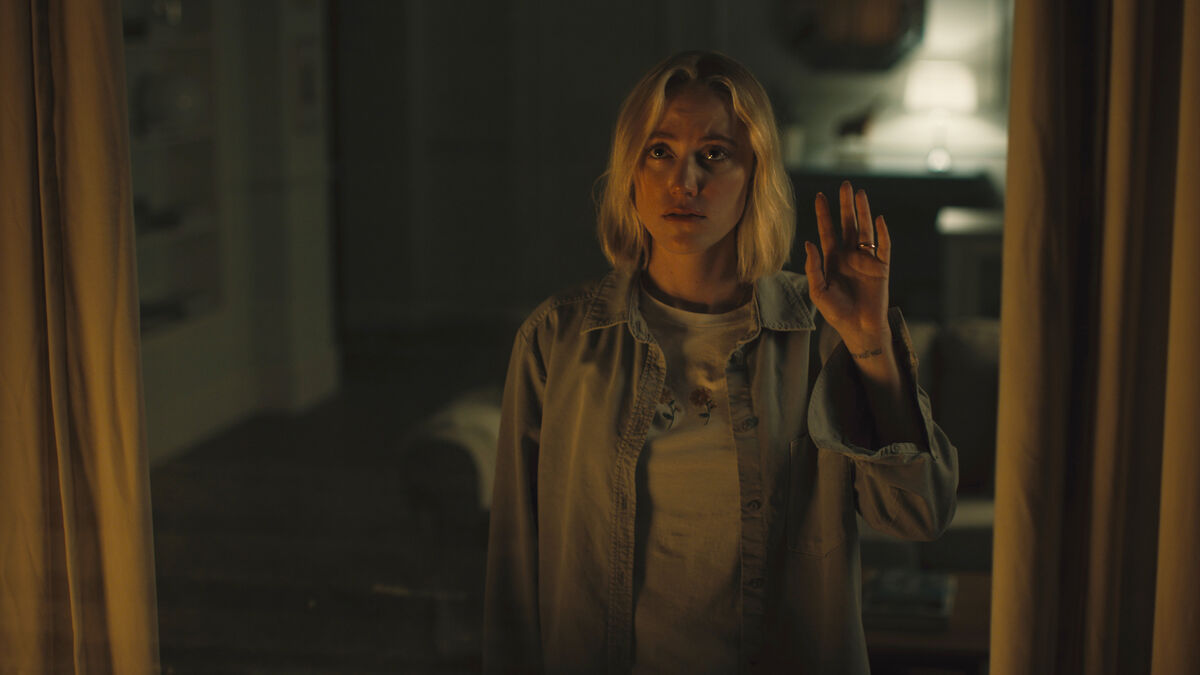
The main character, Julia, steps inside an almost empty movie theater, finds a seat well away from the few viewers in attendance, and attempts to watch the film in peace. And like clockwork, someone invariably sits directly behind her. This is not unlike someone setting themselves up on the treadmill next to you when the entire row is empty; or when someone parks next to you when the entire lot is nearly vacant; or even when someone stands right next you at the urinal when there is no one else present in the bathroom. If not for the already concerning recognition that something may be awry, we might be inclined toward annoyance on the character’s behalf.

Most of the time, this is innocuous, even if a little unsettling. But not so in this film. This is intentional.

Continued after the break

on sale now

The gift of time is, for many, an incredible gift indeed. Unless, of course, it is not a gift at all and arrives with a cost in excess of what one may be willing to pay …

A tale from the Odds ‘n’ Endings Boutique.

spoilers

In fact, so much of this film is intentional. Director Chloe Okuna, in an interview with Letterboxd, disclosed how much of the film developed to orient itself around details that would contribute to the visual expression of Julia attempting to blend in, and the watcher moving closer, as the film progresses. The long, drawn out shots; the colors moving from vibrant to neutral; the framing, using windows, doorways, and cutouts; composition from wider angles to closer shots; these are all intentional, stylistic choices that move us in with the watcher until right at the end, they’re occupying the same space. Even the decision to omit captions over Romanian dialogue is intentional, adding to the isolation we share with Julia, who is as much a stranger in these spaces as we are.

All of this adds up to a film that fails beautifully in relying on standard horror tropes. Instead of a naively unaware Julia, whose lack of attention makes us yell at the screen for her to turn around or look behind the door, those long, drawn out shots serve to heighten suspense. Here is a character who has strong situational awareness, and instead of cutting away immediately to the next scene, we’re left wondering what will happen next as the camera fails to pan, turn, change. We feel she is being watched even as we are the ones watching her.

The lack of cheap tricks is also noticeable with attention drawn to little things like curtains, or sounds. Julia is not dismissive of anything that may prove to be of import; even her partner is not outright dismissive of Julia’s concerns. Hell, even the singular jump scare in the entire film is artfully accomplished. It’s clever. It’s powerful.

My favorite experience in watching this film is a scene where Julia is following her assumed stalker, which shifts the balance of the dynamic somewhat to where you’re left wondering for a moment, “who is watching whom?” It’s a brilliant shift, one addressed directly by Letterboxd in their interview with Okuna:

Letterboxd: … How did you approach the creation of that push-pull tension of who’s really the watcher?

Okuna: … The more we developed it, the more I wanted to embrace the ambiguity. I wanted to make sure that the person we’re casting, you could see him as like, maybe he’s misunderstood. Maybe he’s just lonely. Maybe he’s just an outsider. There’s a sort of patheticness to him that you can feel sorry for him and think that she’s actually the one who’s misunderstanding him in some fundamental way.

There is very little unaccounted for in the creation and development of this film—from script to screen—and as such, this is a rare gem. It’s a slow burn, such that we are frogs in a slowly boiling pot, but so well-flavored and luxurious that by the time the film ends, we are well cooked and we relish it.

Well aren’t we off to a strong start? This list spans decades of film—1968 to 2022—and displays a breadth of creativity across two often interrelated topics: paranoia and stalking. We here at the Calamity certainly appreciate when creatives can take common tropes and weave interesting stories from them. And it is our sincerest desire that you enjoy your journey through this curated list. Do not hesitate to provide feedback, should you have any, by utilizing the survey below. And mark your calendar to return next Thursday for another List!

Please, for the love of all that is unholy and calamitous in this world, please let us know what you think of this content! The buttons below will each take you to a respective survey consisting of two to three questions. Your opinions will help shape the future of Backstage at the Calamity.

Reply

Avatar

or to participate

Keep Reading